
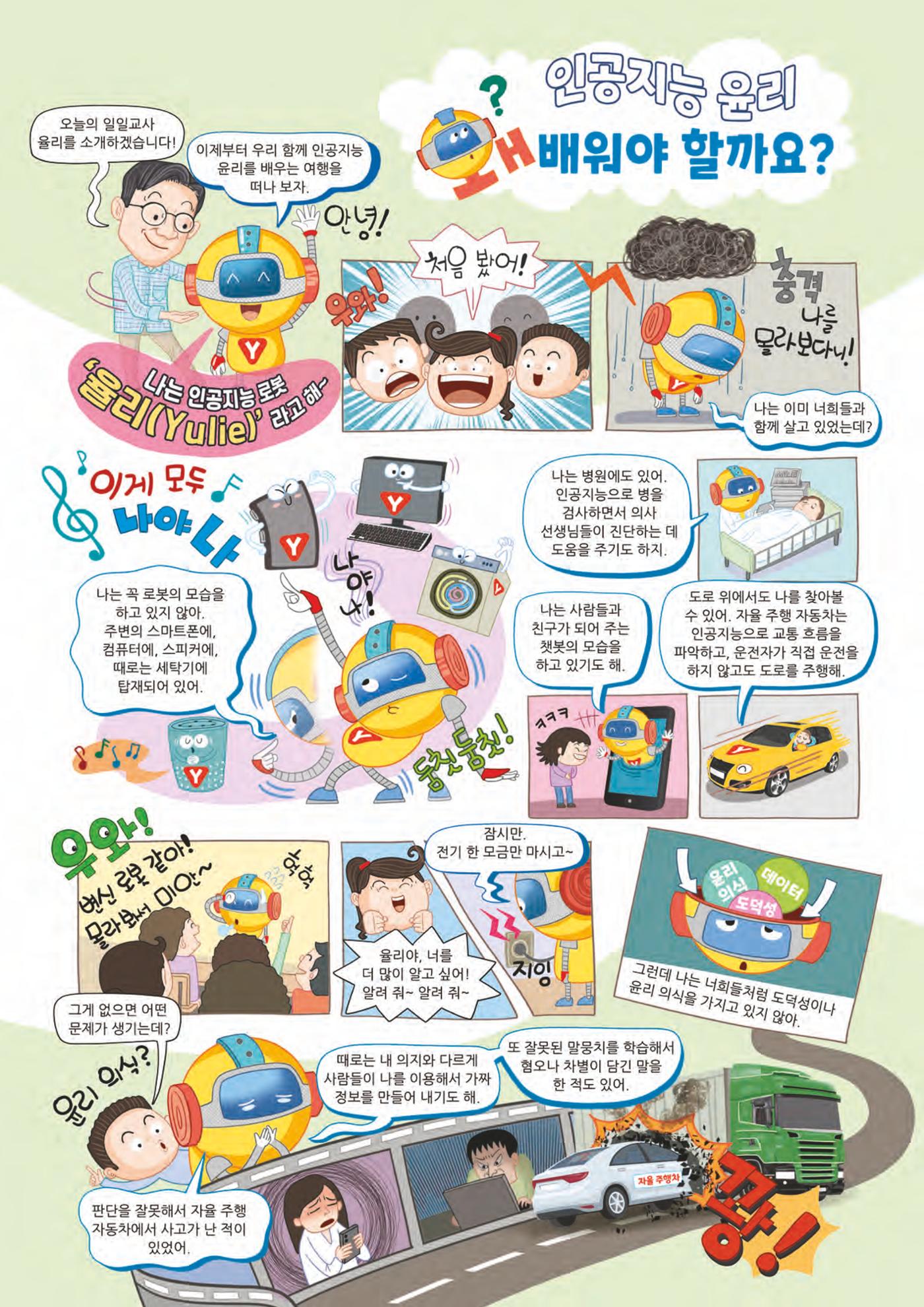
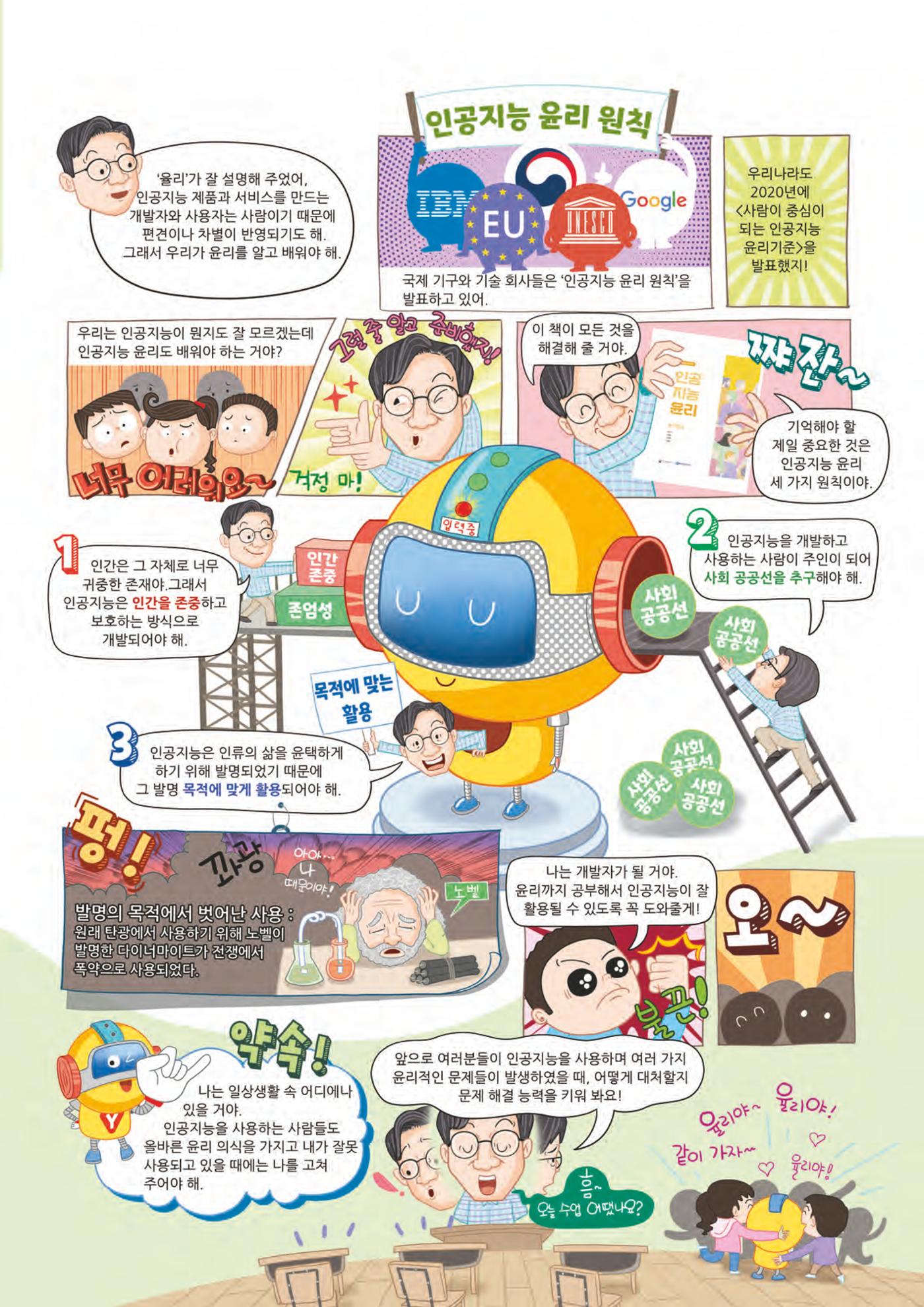
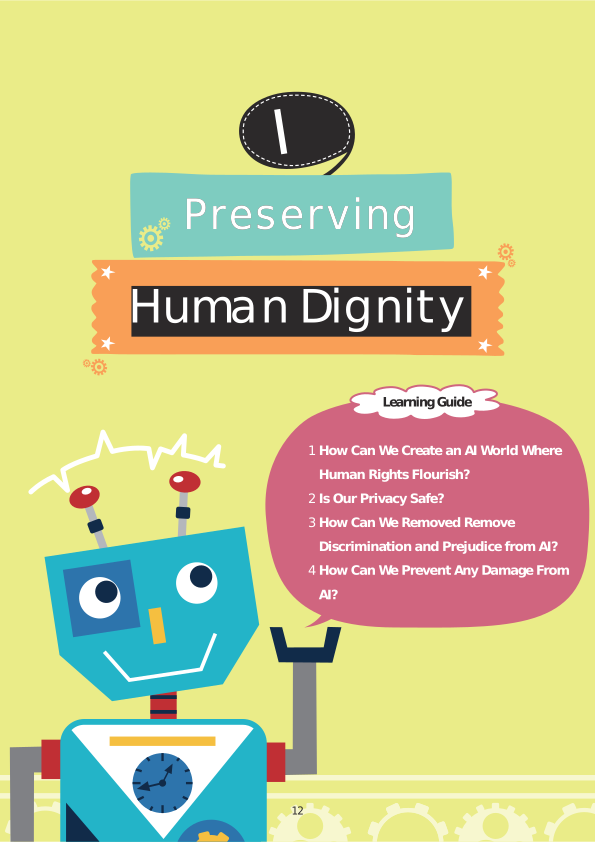
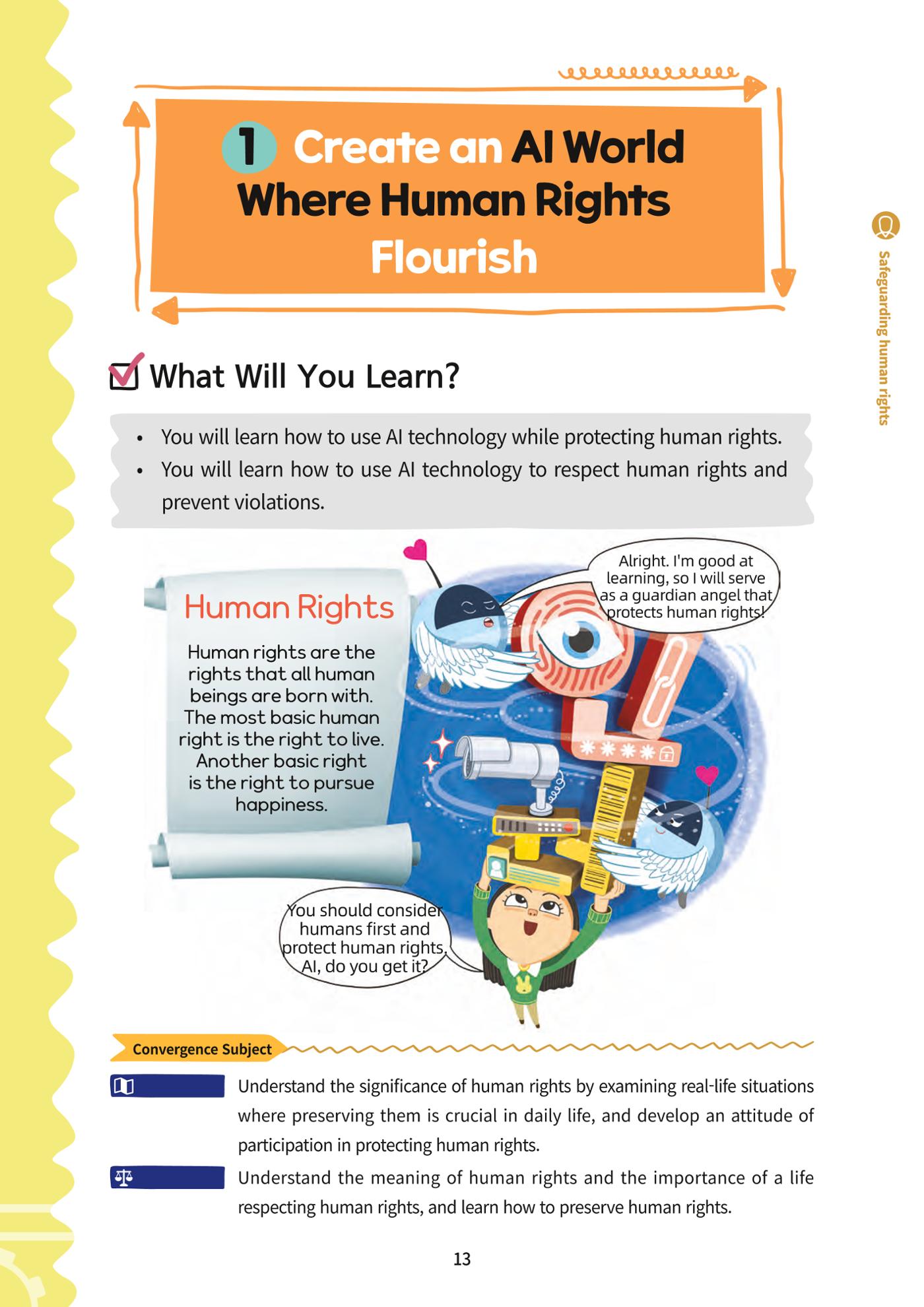
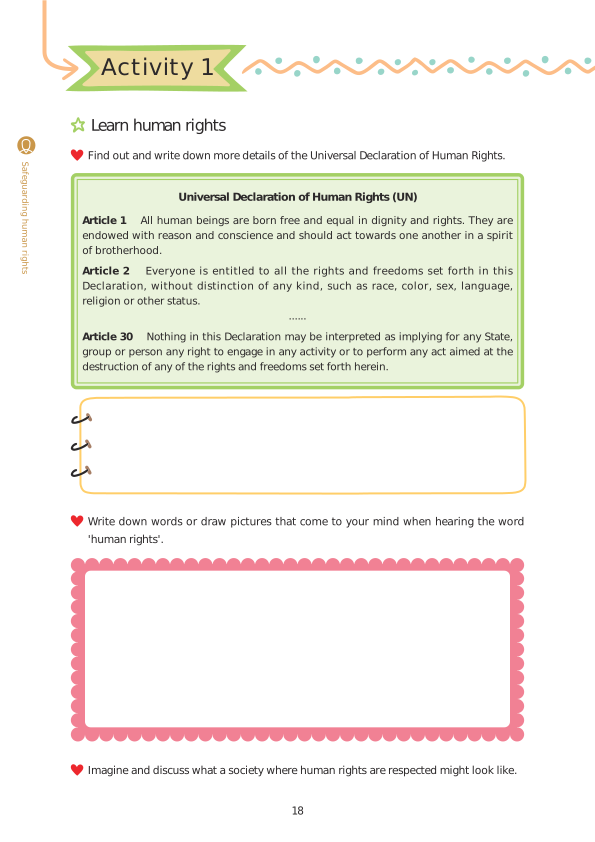
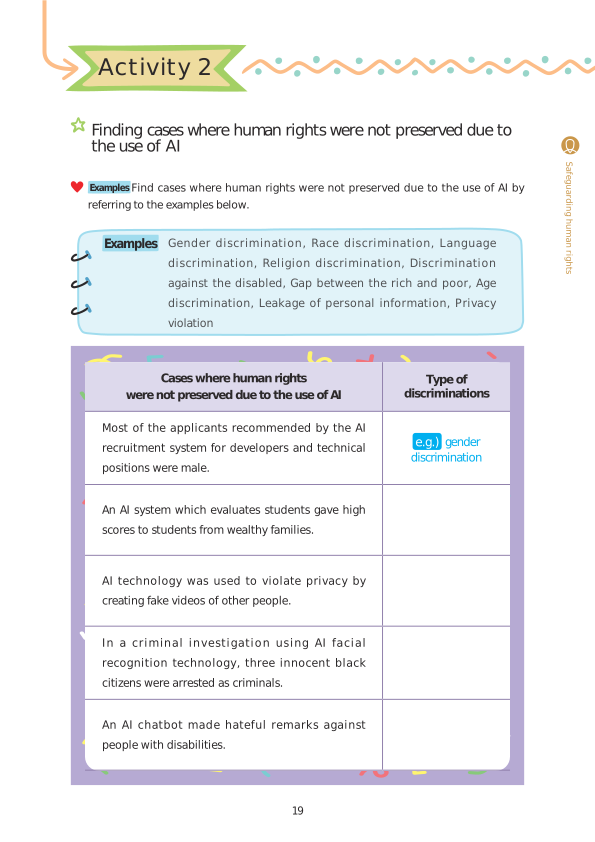
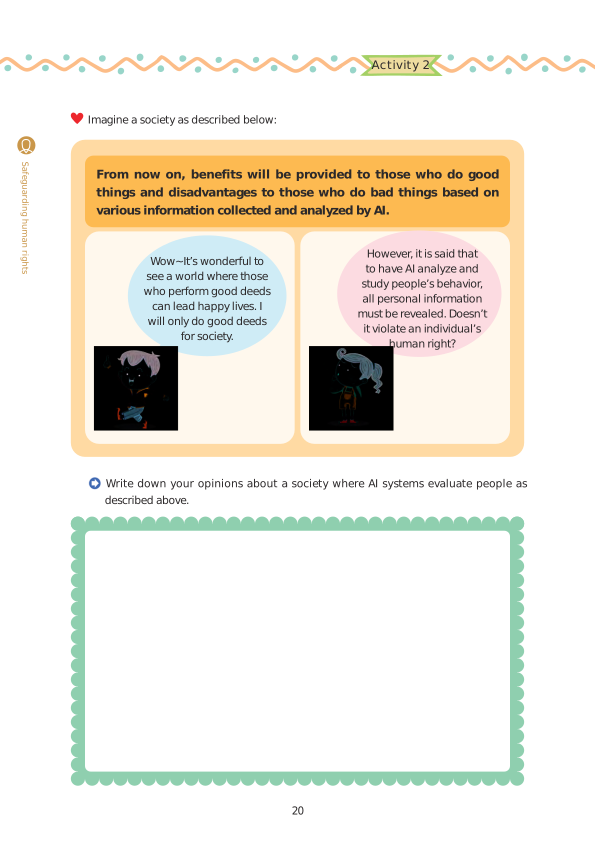
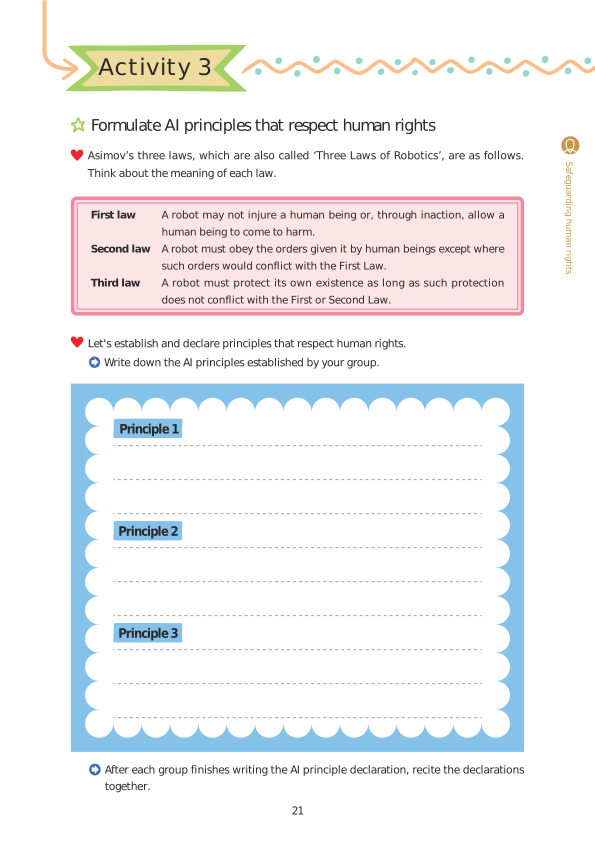

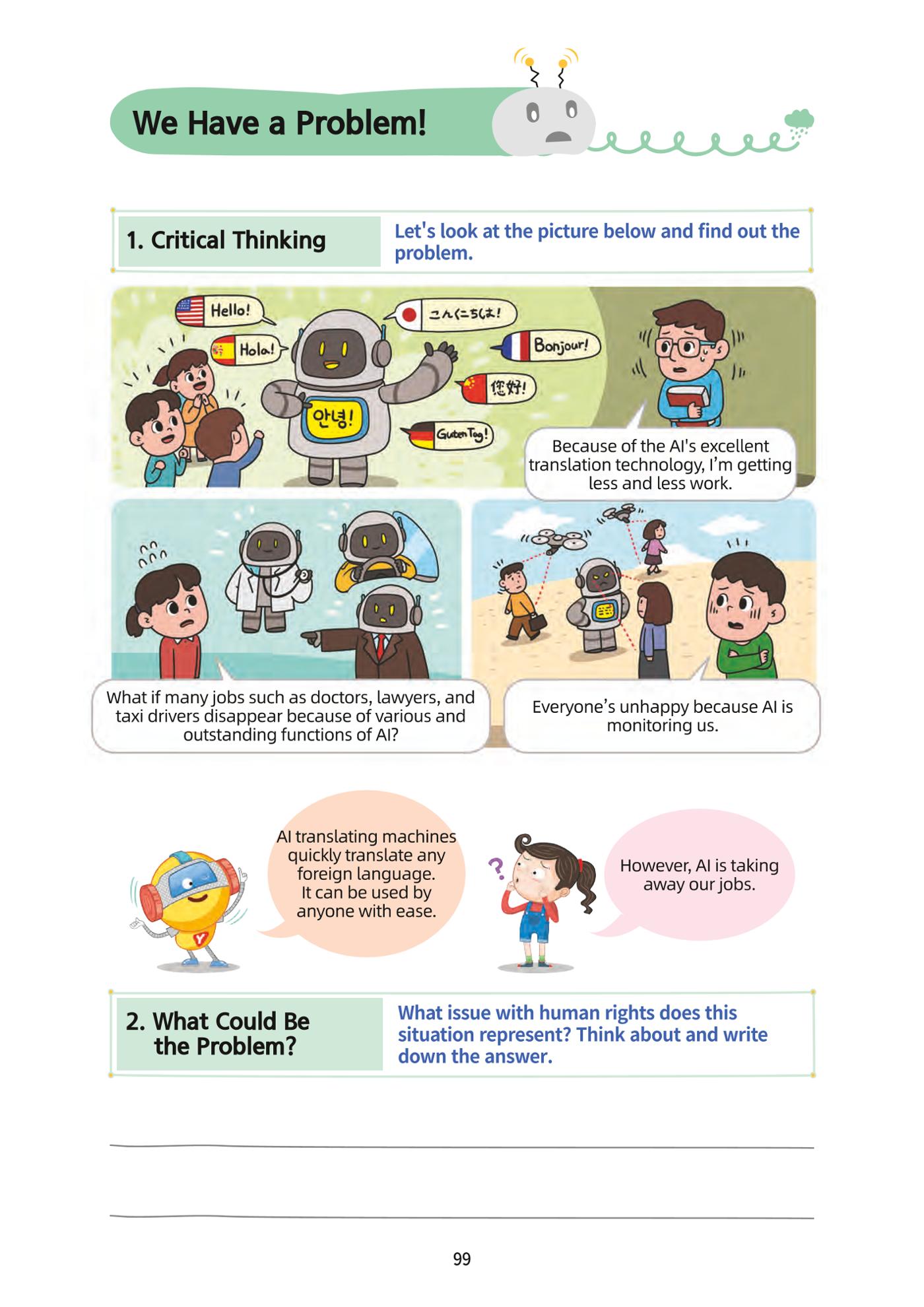
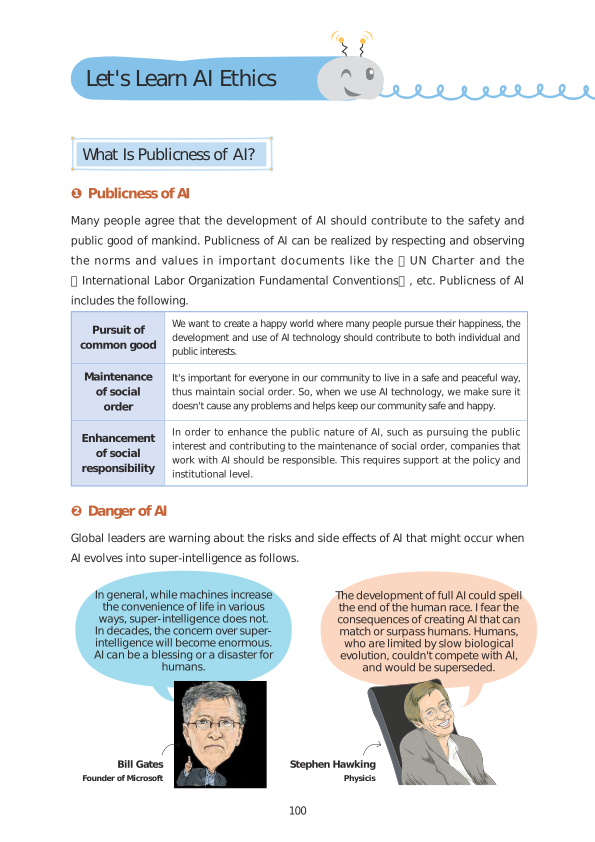
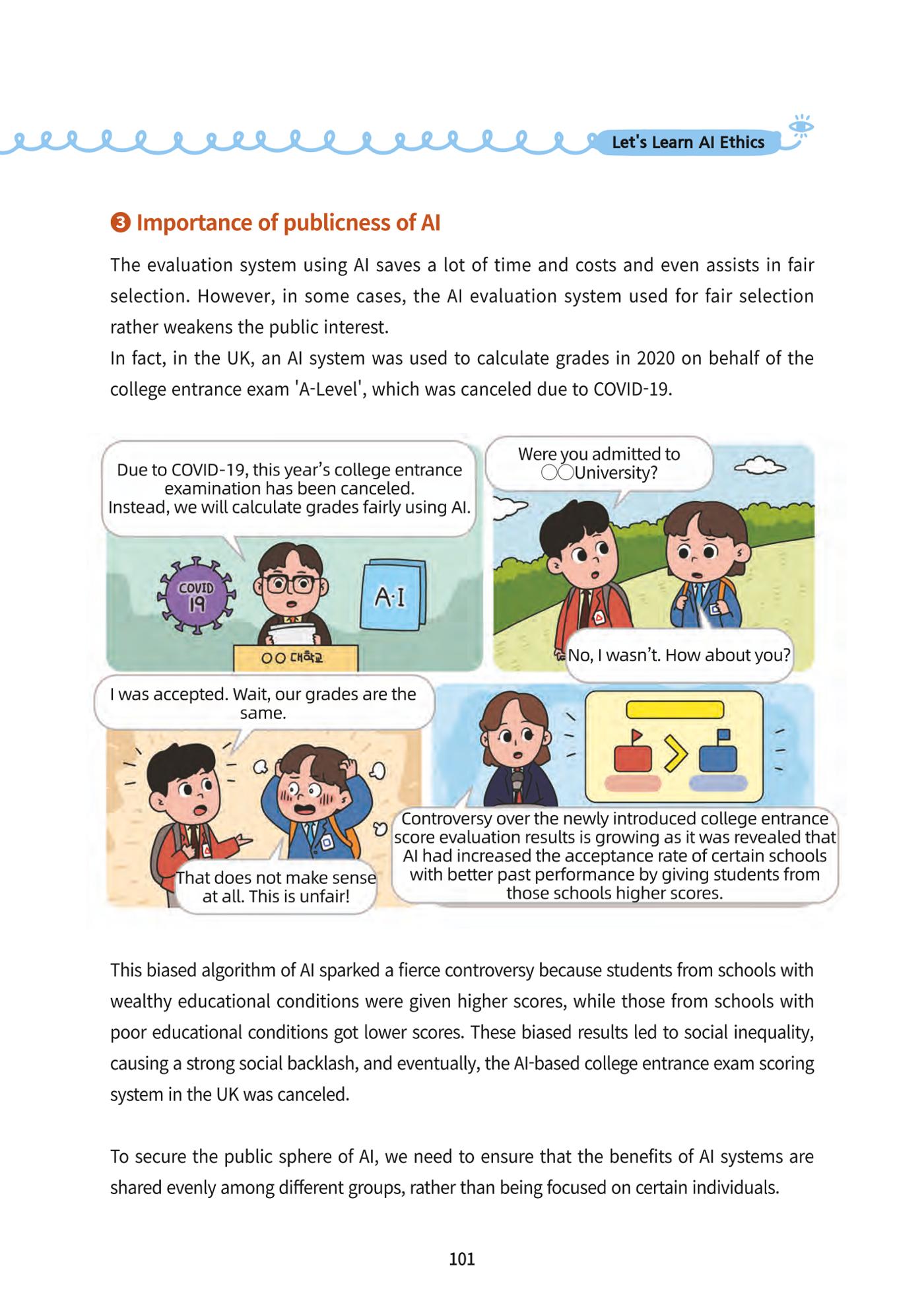
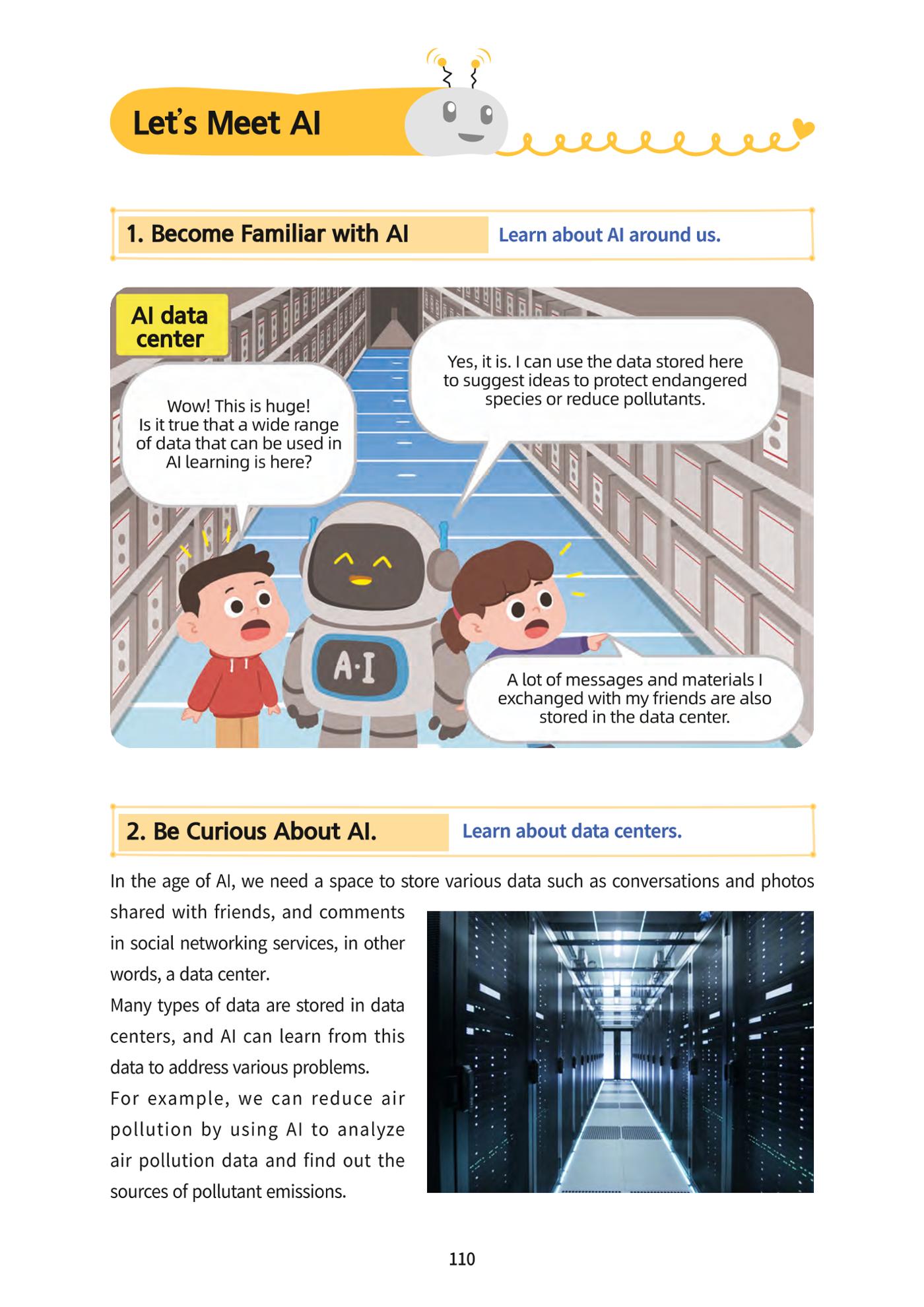
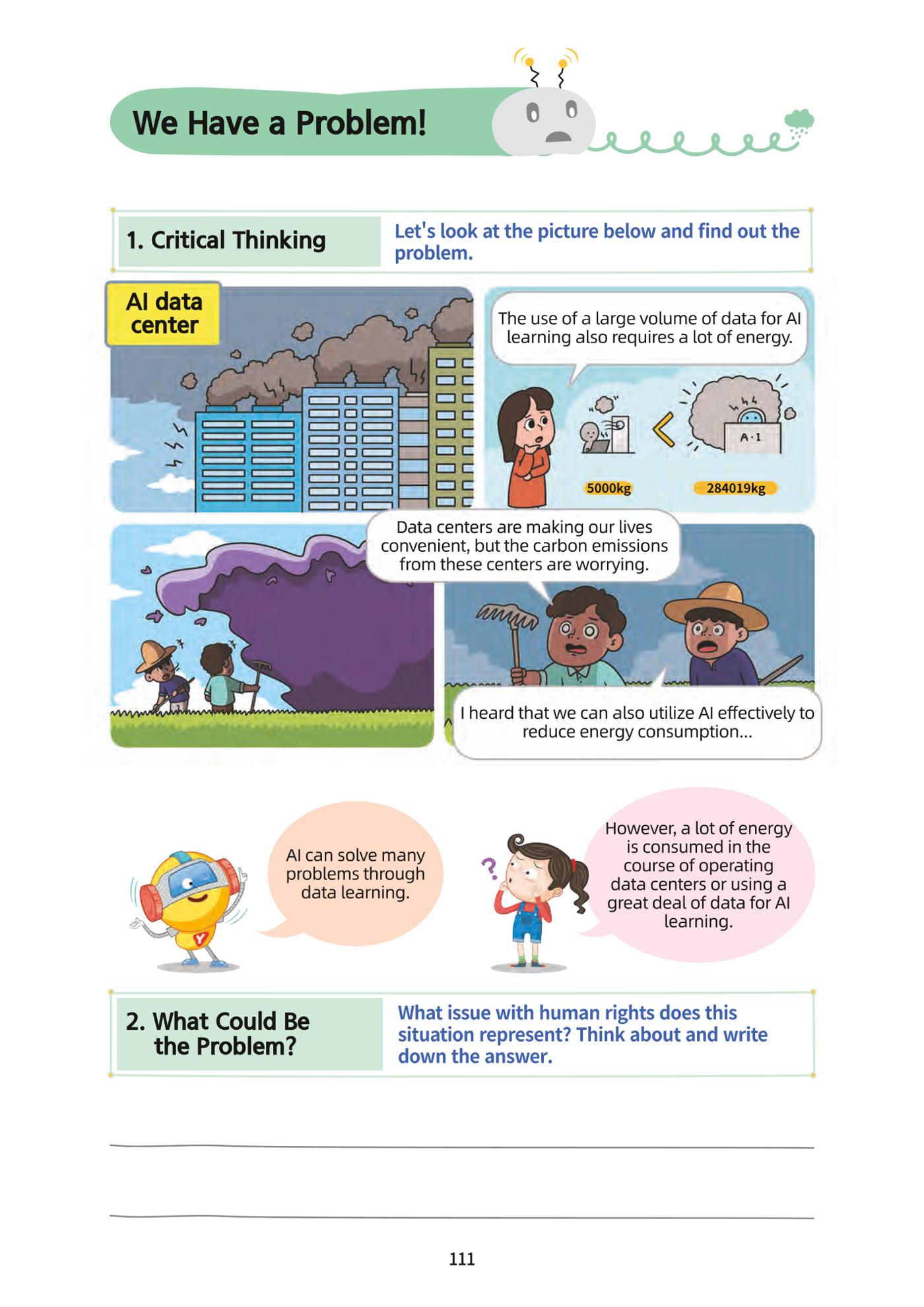
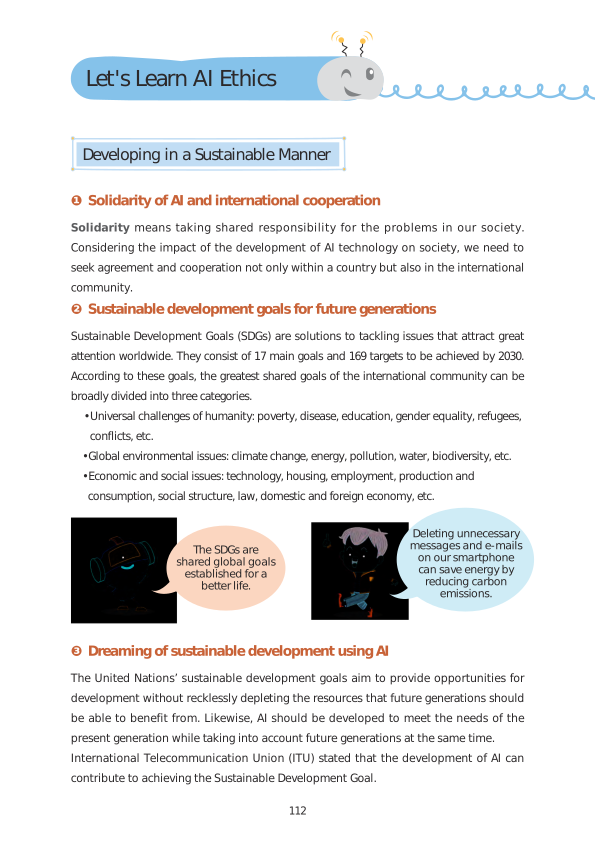
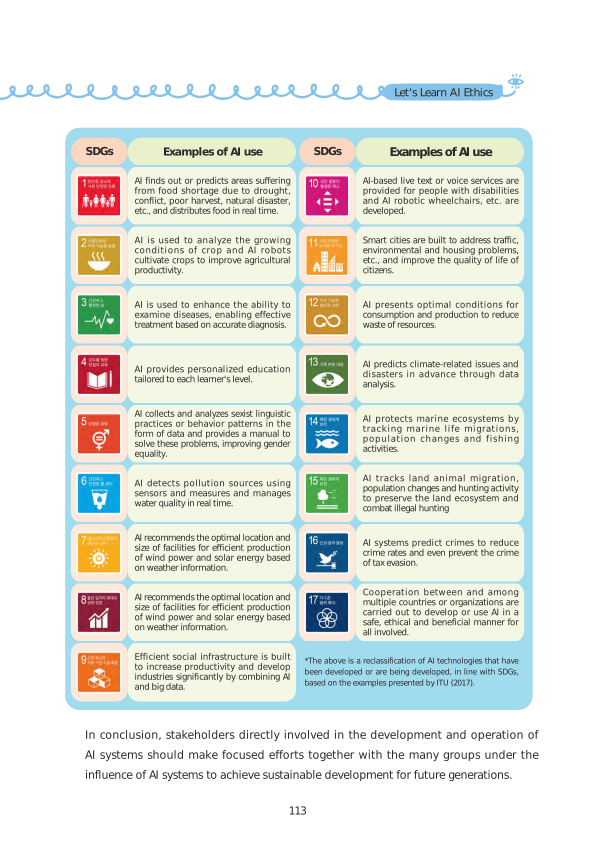
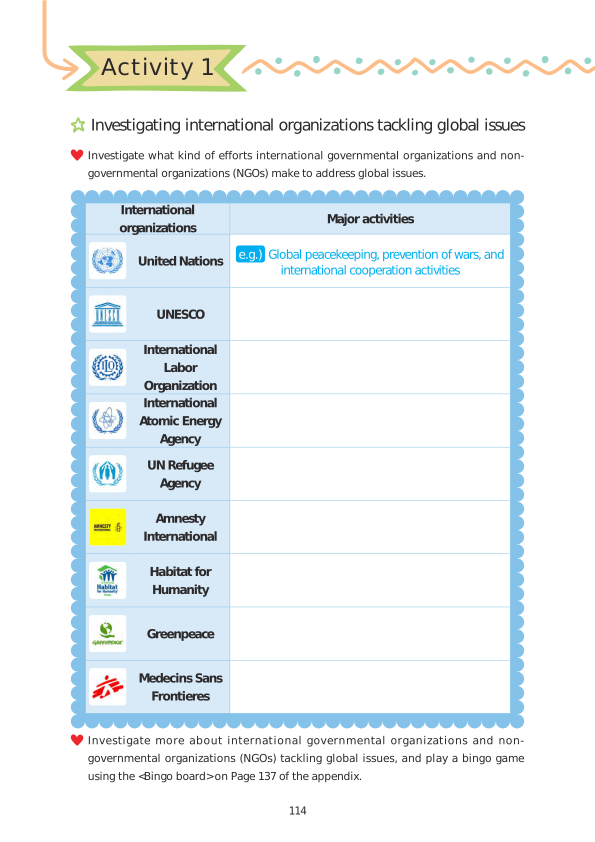









Artificial intelligence (AI) ethics is evolving in line with the development of AI. AI can be used both positively and negatively depending on how we use it. In the upcoming era, we need to think ethically based on the technical principles of AI. Learning AI ethics means the process of forming a social consensus to use AI in a beneficial way by striving to maximize its positive functions and minimize the adverse ones. This book, designed for elementary school students, will help you identify ethical issues by exploring AI use cases across the globe based on understanding the concept of AI, its principles, and how it works. This book explains the three principles of 「Artificial Intelligence Ethical Standards」 (human dignity, common good of society, and proper use of technology) in plain words and expressions that are easy for students to understand. In particular, the details of this book are based on activities, providing opportunities for upper elementary school students to get a grip of and experience the concept of AI ethics. Korea Information Society Development Institute hopes that this book will contribute to the spread of AI ethics throughout society and mitigate teachers' burden of developing textbooks.
Sang-hyun Choi (Teacher at Hyangsan Elementary School)
AI is already prevalent around us and making our lives more convenient. AI technology is expected to have a greater impact on our lives in the future. However, if we fail to use AI technology properly, we might experience great difficulties. Therefore, before using the technology, we must first consider ethical aspects of AI to utilize it more conveniently and safely.
Tae-yeon Kim (Teacher at Boreum Elementary School)
AI has taken its deep roots in our lives before we realize it. Not to mention the function of recognizing a person's face on Insta◯◯, the function of searching for music you like to listen to through Chlo◯ and GiGA Ge◯ is also based on AI technology. In future society, the role of AI…
앞부분 일부를 원문에서 글자로 옮긴 것입니다. 표·그림과 전체 내용은 이북에서 확인하세요.