
Middle school | For students
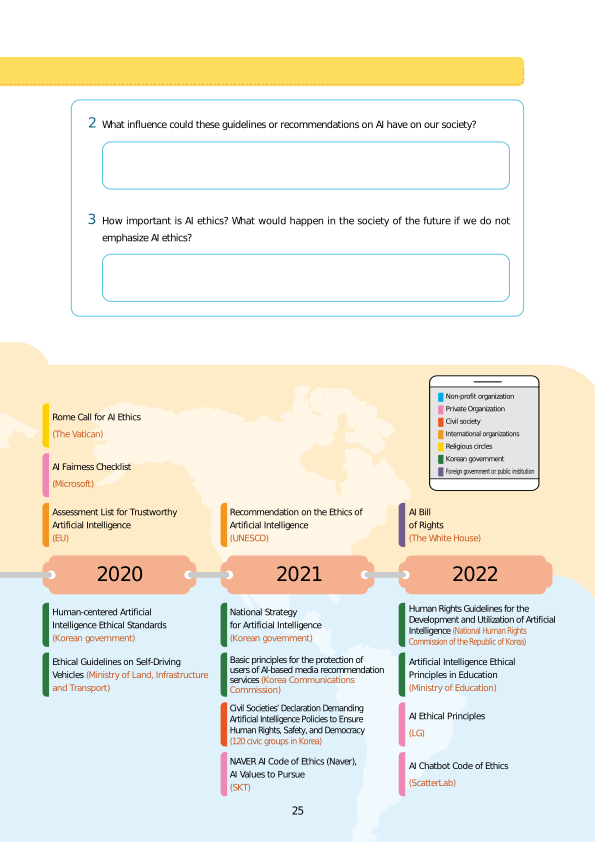
Artificial intelligence (AI) ethics is evolving in line with the development of AI. AI can have a positive and negative influence, depending on how we develop and use it. From now on, we need to think ethically based on the technical principles of AI. This is because the many social problems in the age of AI will differ from the ethical problems we are facing in society today.
Thus, the demand for AI ethics education is gradually increasing. This change stems from the increase in the use of AI technology in our lives and the social and economic benefits and opportunities that are a direct result of AI. Learning AI ethics means forming a social consensus on how to use AI in a beneficial way through efforts to maximize its positive effects and reduce any negative influence.
AI is being developed and used for the purpose of improving the quality and convenience of our lives. Although AI is developed for people’s benefit, as with all other technologies, adverse effects may result from the development and use of AI. In contrast to automated systems that only carry out repeated tasks, AI has infinite possibilities to judge and act in consideration of its surroundings and beyond the level of human intelligence. As AI generates both high expectations and fear, AI ethics has become more important than ever before.
Although it was initially believed that ethics should be programmed into AI, there has been a shift in understanding that people should be equipped with AI ethics themselves since humans are the subjects of creation and use of AI. For now, students are mainly playing a role as users, but they can grow to become AI developers or product managers of the future. Therefore, it is crucial to educate students going forward to help them think about AI ethics and put them into practice. Students will be required to observe the overall process of developing and using AI in the future.
In light of current educ…
앞부분 일부를 원문에서 글자로 옮긴 것입니다. 표·그림과 전체 내용은 이북에서 확인하세요.