




High school | For students
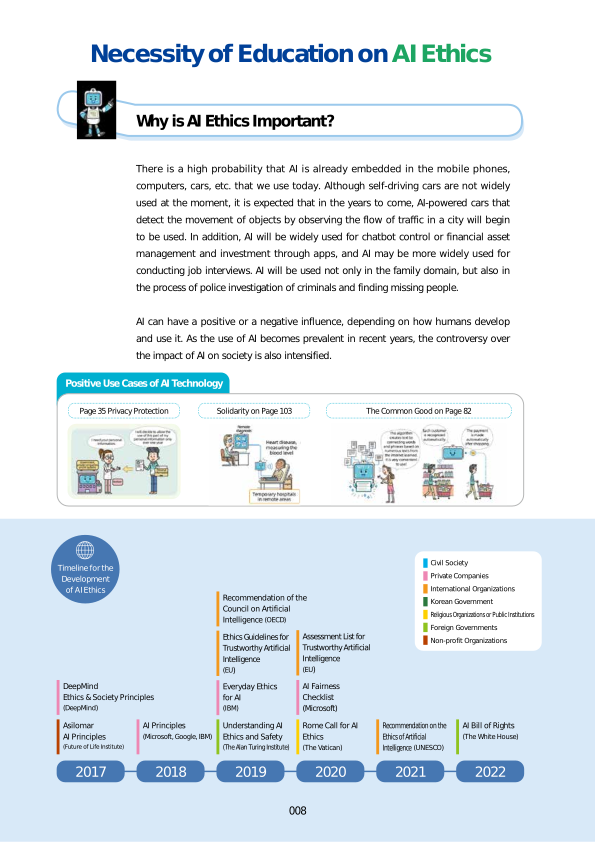
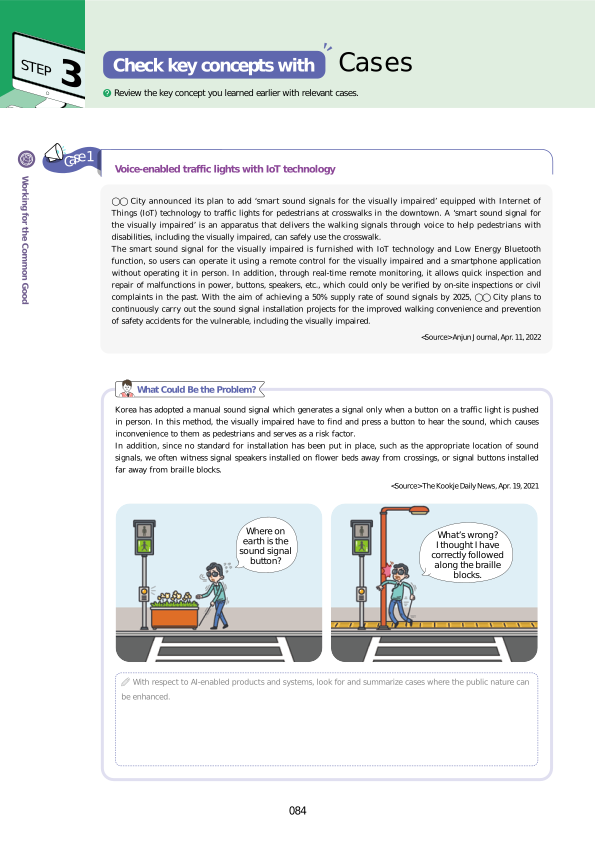
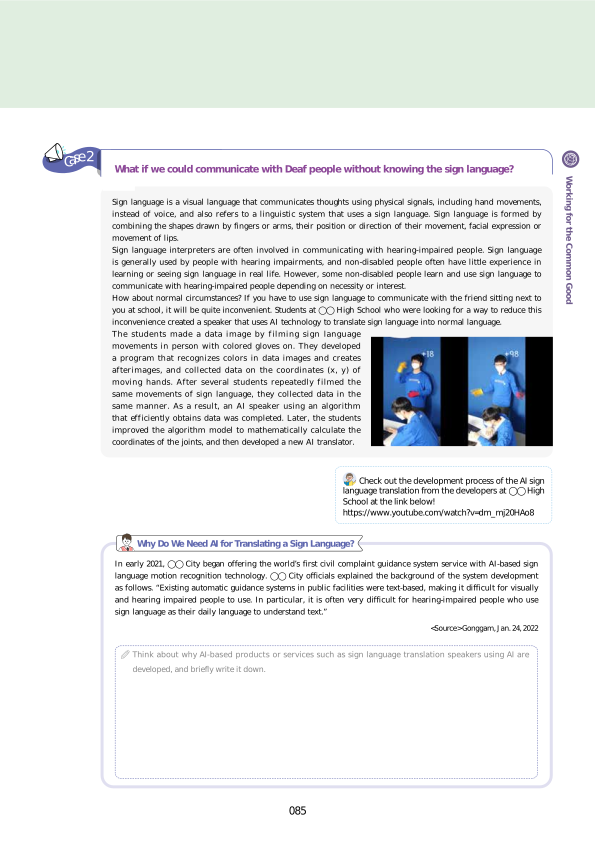
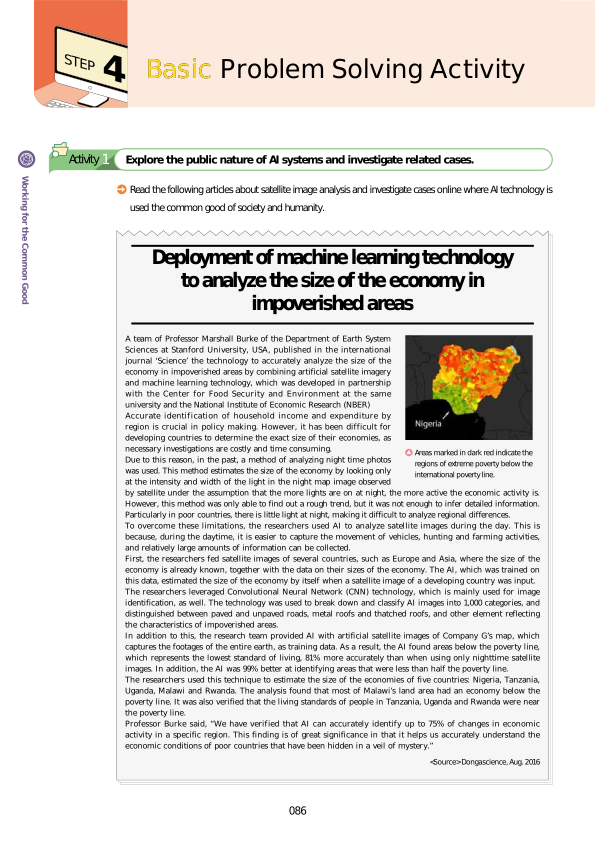
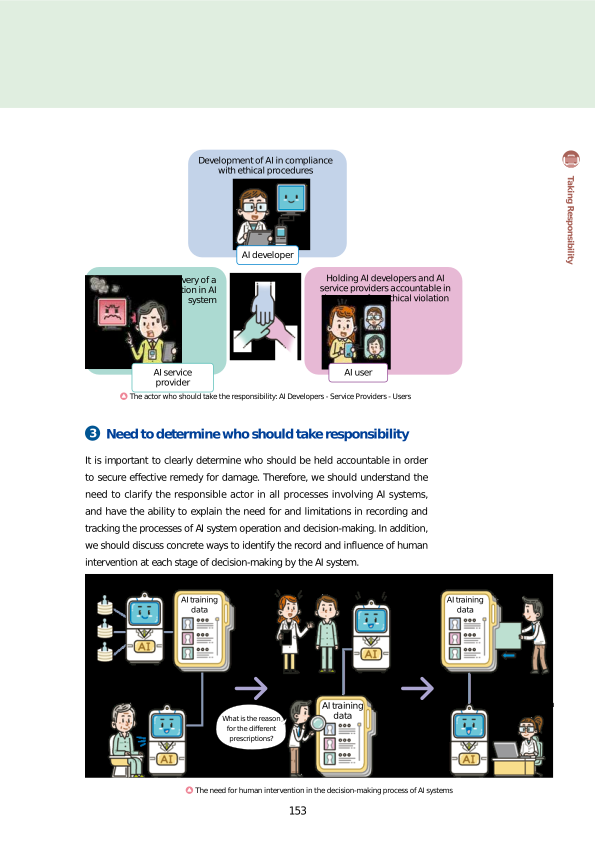
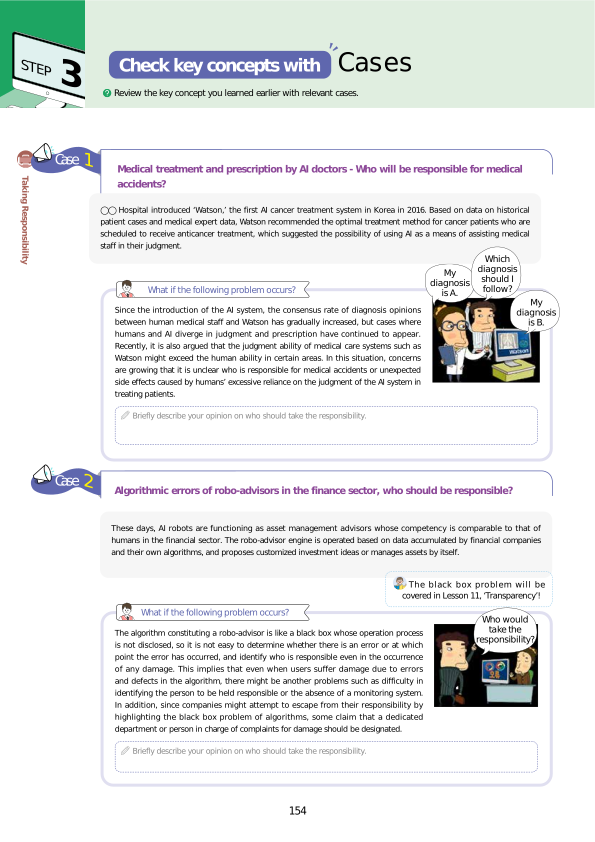
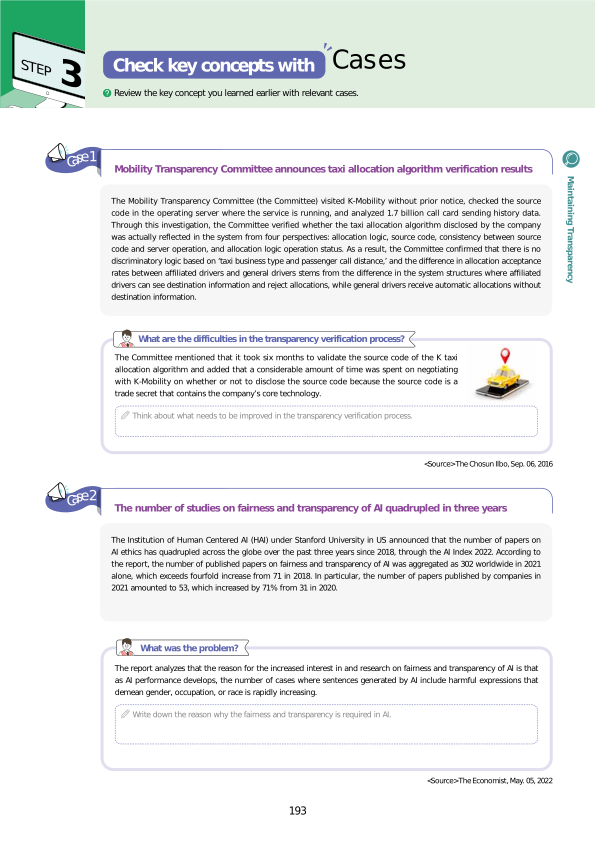
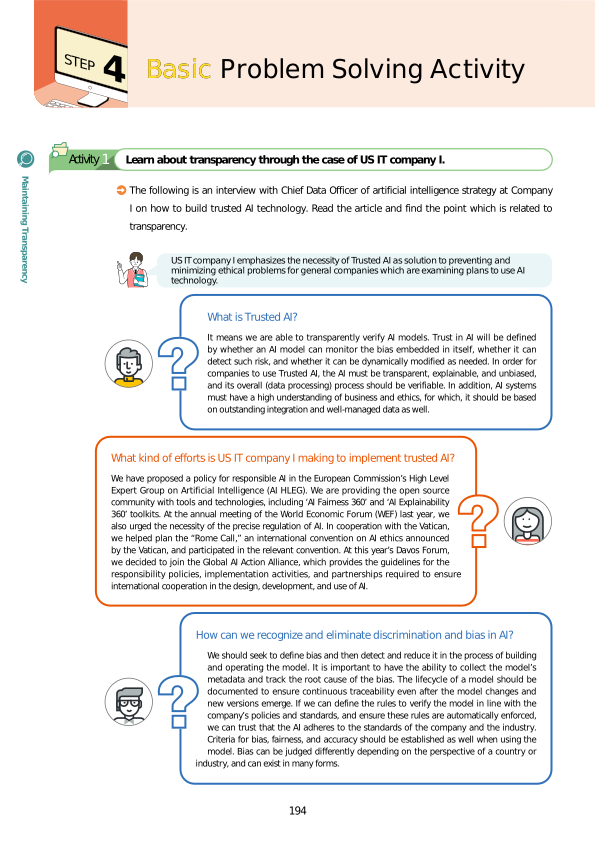
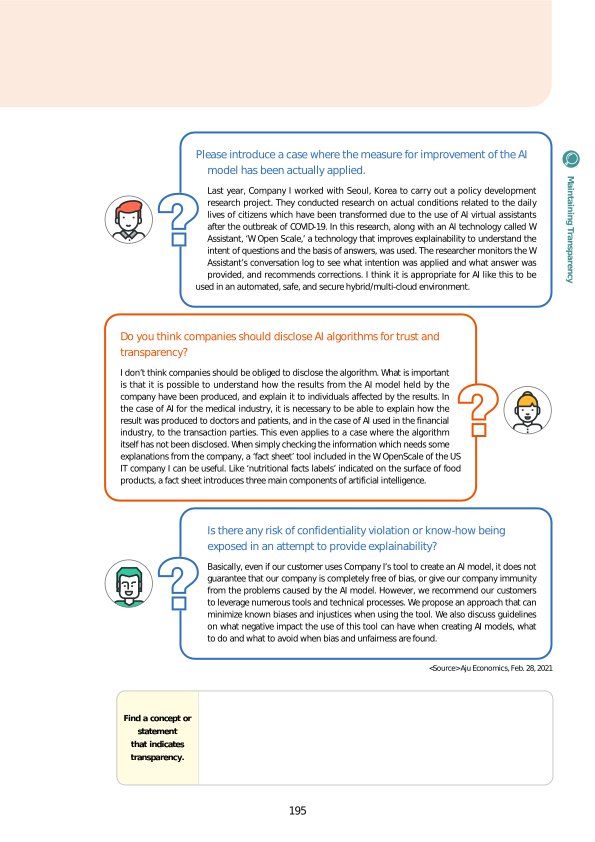
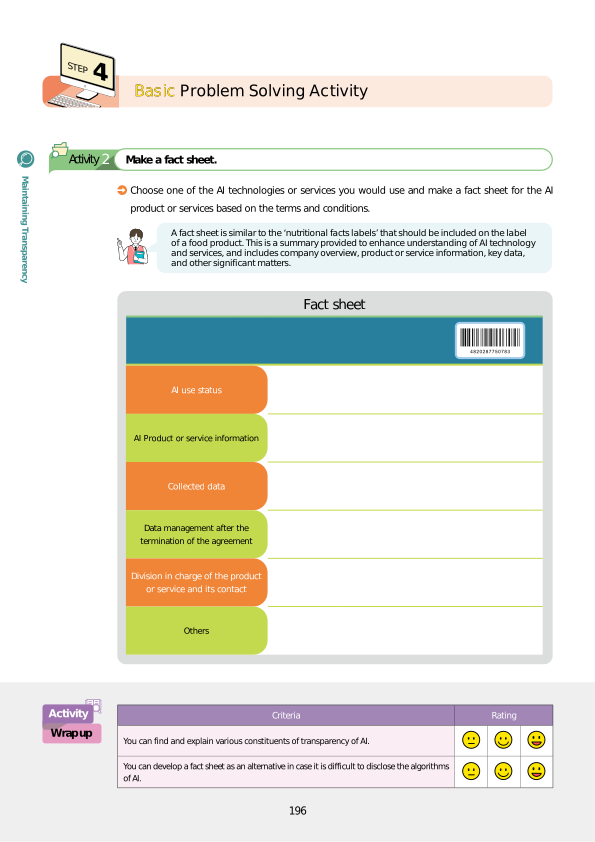
Artificial intelligence (AI) ethics is evolving in line with the development of AI. AI can have a positive or a negative influence on society, depending on how we develop and use it. In the near future, we need to develop an ethical perspective based on an understanding of the technical principles of AI. This is because social problems we will encounter in the age of AI will be different from the ethical problems we are currently facing in human society.
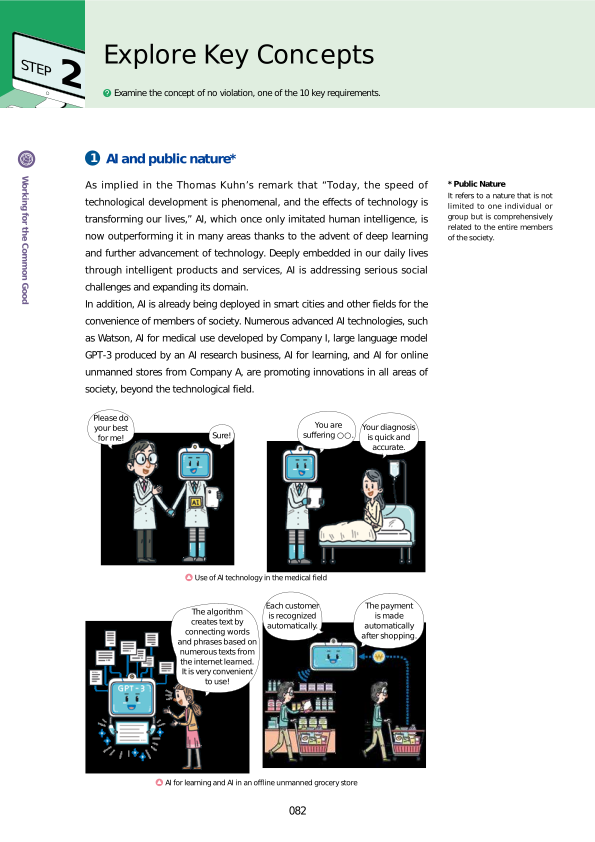
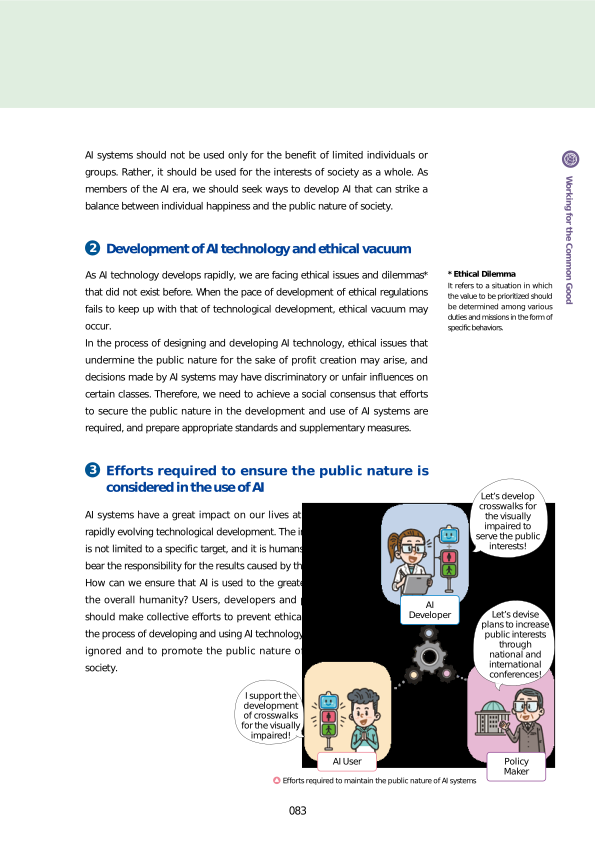
Thus, demand for AI ethics education is gradually increasing. This change stems from the increased use of AI technology in our lives and the direct impact of AI on our social and economic spheres. Developing an AI ethic is the process of forming a social consensus to use AI in beneficial ways through efforts to maximize its positive effects and reduce any negative influence.
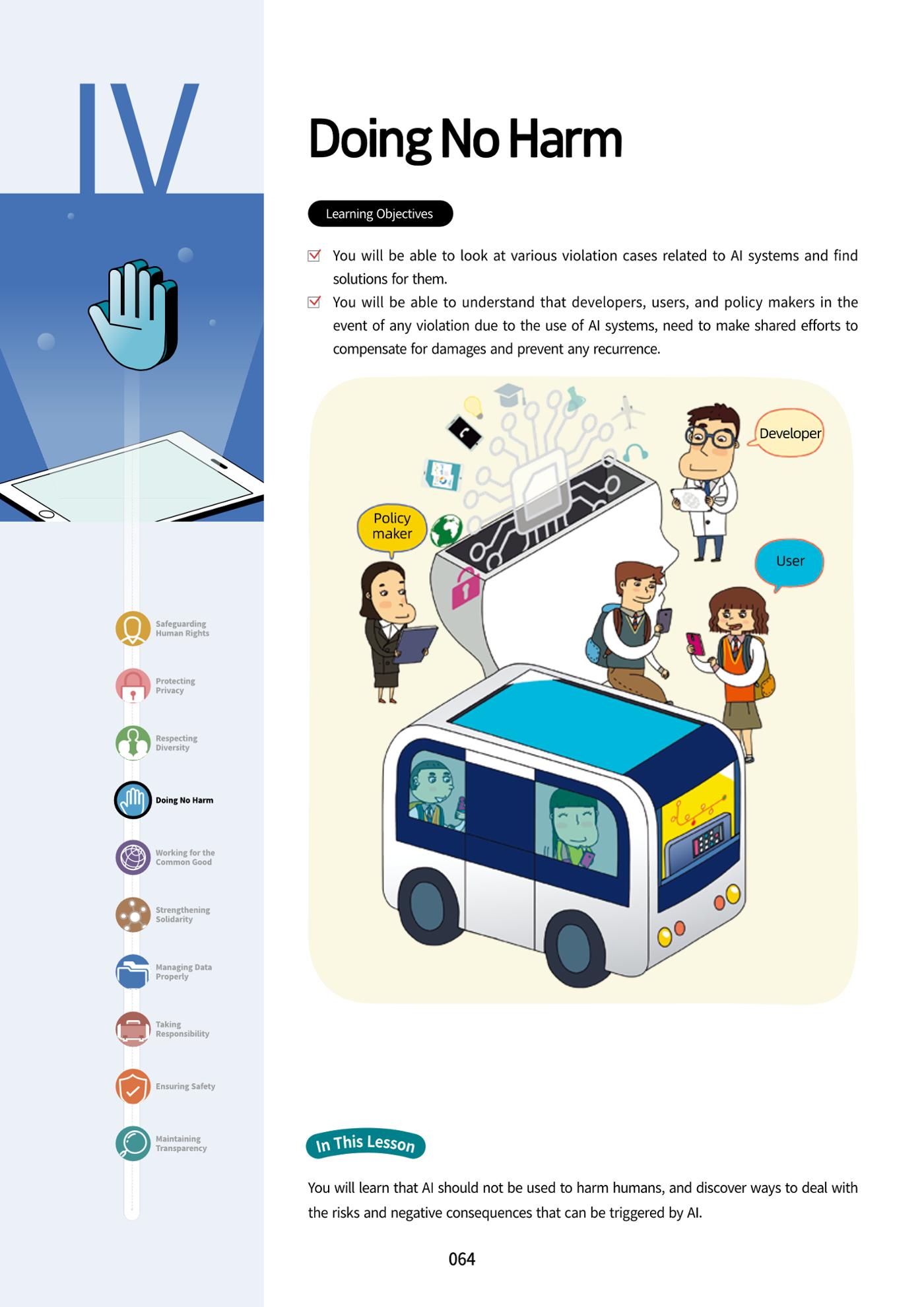
AI is being developed and used for the purpose of improving the quality and convenience of our lives. As with all other technologies, although AI is developed for the benefit of people, adverse effects may become apparent in the course of developing and using AI. However, AI has infinite possibilities in that it can judge and act in consideration of surrounding situations beyond the level of human intelligence, in contrast to existing automated systems that only repeat predetermined routines. Because AI is generating such high expectations and fears at the same time, AI ethics is more important than ever.
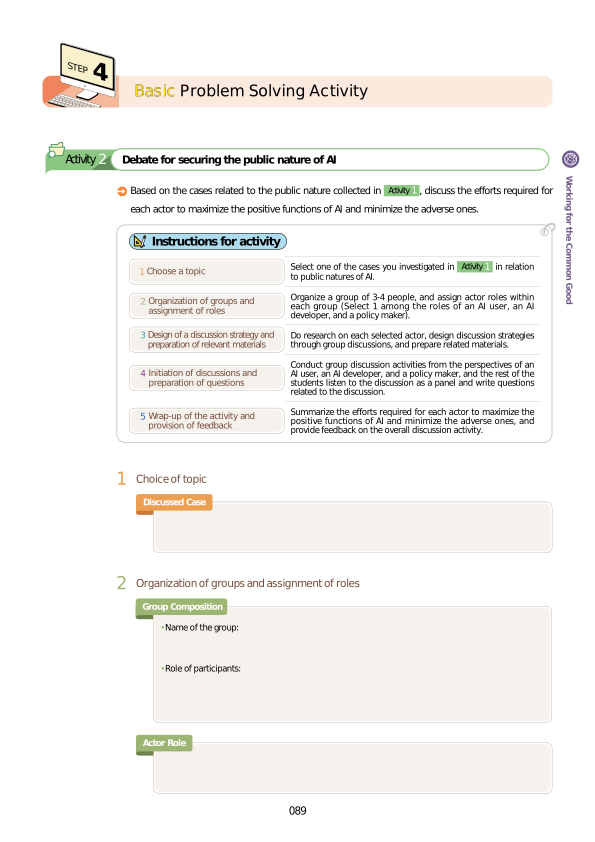
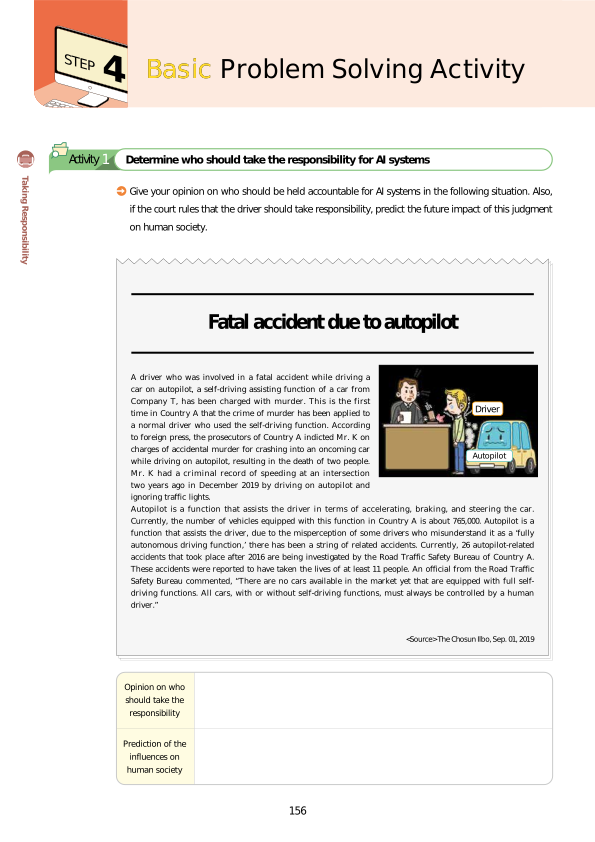
In the beginning, many thought that ethics should be programmed into AI itself. However, as people have come to understand that humans are ultimately responsible for creating and using AI, the importance of understanding AI ethics is now at the forefront of many people’s minds. For now, students are mainly interacting with AI as users, but they may grow to become AI developers or managers in the future. Therefore, it is crucial to educate students going forward to help them…
The…
앞부분 일부를 원문에서 글자로 옮긴 것입니다. 표·그림과 전체 내용은 이북에서 확인하세요.